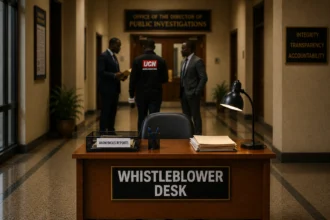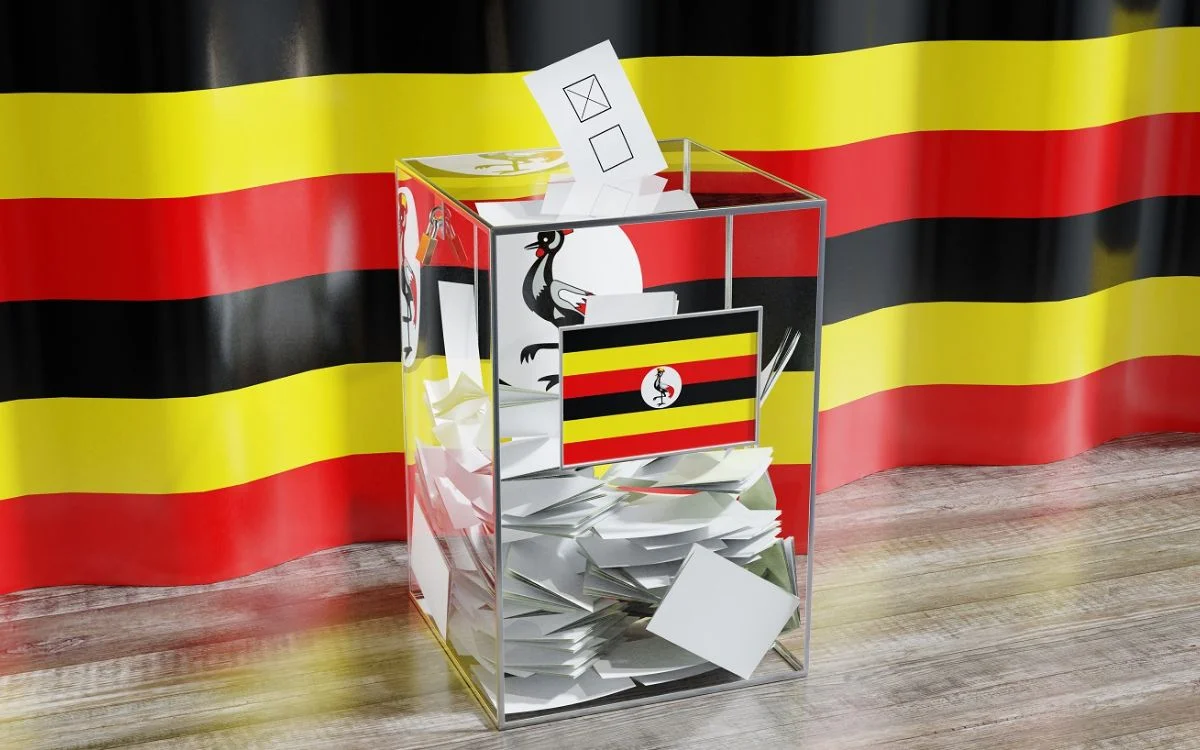
KAMPALA, UGANDA – Plans by the Electoral Commission (EC) to deploy advanced biometric technology to ensure “one man, one vote” have been met with derision and dismay from Uganda’s population of ghost voters, who argue the move unfairly targets their time-honored electoral contributions.
The backlash follows assurances from EC officials, including member Stephen Tashobya, that new voter verification kits and QR-coded ballots will make ballot stuffing “a thing of the past.” This declaration has caused existential anxiety among spirits, ancestors, and the entirely fictional individuals who have formed the backbone of many a tight election result.
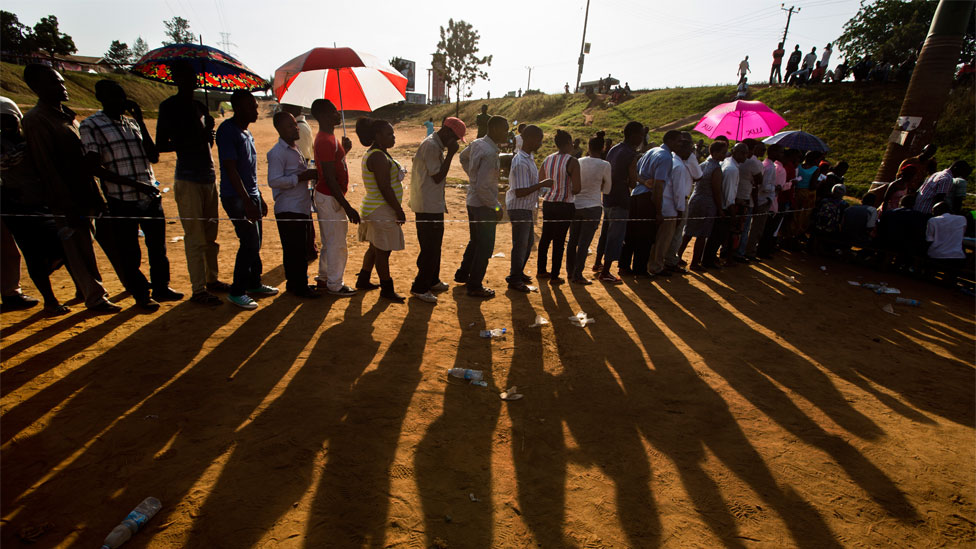
“This is literal erasure,” complained an entity identifying itself as the collective voice of several ghost voters from a central district, speaking through an unreliable medium. “For decades, we have performed a vital civic duty. We turn out in bad weather, never complain about queue lengths, and are incredibly affordable to mobilize. Now, because we lack fingerprints or a reflection for the camera, we are being purged from the process. It’s inhumane.“
The EC’s Director of Operations, Richard Kamugisha, recently detailed the 109,000 new tablets before Parliament, highlighting their ability to verify all fingerprints and use facial recognition for worn prints. An unreliable source within the EC, however, confided that the system has one major flaw: “It only works on the living. We’ve tested it. You point it at an empty space where a ghost voter is supposedly standing, and it just shows a low battery icon. Completely useless for nearly half our expected turnout.”
Professor Arthur Bwanika, a chair of Spectral Studies and Political Apparitions at Makerere University, explained the socio-electrical impact. “You cannot simply dismantle a complex ghost-voter ecosystem overnight,” Bwanika stated. “These entities have paperwork—old baptismal certificates, faded village registers. They have rights. This move towards ‘verification’ and ‘real people’ is a form of spectral prejudice that could lead to a haunting of the entire electoral system, manifesting as unexplained polling station malfunctions.“
The ghost voters have threatened to adapt. One suggested they might now have to possess living voters to cast a ballot, a method described as “messy, ethically grey, and terrible for voter turnout.” Another proposed simply following the tablets from the warehouse and draining their batteries ahead of polling day.